

Should Sapiens Survive? (Pro Point #3)

Thinking Fast
“Perhaps we will have to inspect mankind as a species, not with our usual awe at how wonderful we are, but with the cool and neutral attitude we reserve for all things save ourselves.”
– John Steinbeck in America and Americans
For people who don’t think in money in modified forms such as the triple bottom line or financial impact of loss of ecological “services,” there are some wonderful developments that presage post-anthropocentric consenses. In Bhutan, the government tracks the Gross National Happiness, which expresses its commitment to a shared set of Buddhist cultural values. In a move that would have been approved of by Ashoka, an ancient Indian emperor who recognized all sentient beings as citizens deserving of protection, New Zealand has recognized the rights of all sentient beings. These are ancient views that set the stage for the twentieth century concept out of W. C. Allen and Woods Hole of aggregated animals, which is extended and reframed by Evolve Medicine as the body of life in time.
A new term that is simpler and a better fit to ecological realities in the Anthropocene age of consumptive destruction of the body of life is the new Gross Biomass Product, or GBP. Based on the 2018 work of biologist and physicist Ron Milo with Yinon Bar-On, this construct leap-frogs over the Santa Fe Institute’s efforts to reduce biology to thermodynamics; it represents a finite and biocentric metric that is difficult to derive but simple to grasp. The distribution of biomass across kingdoms is captured in this figure:
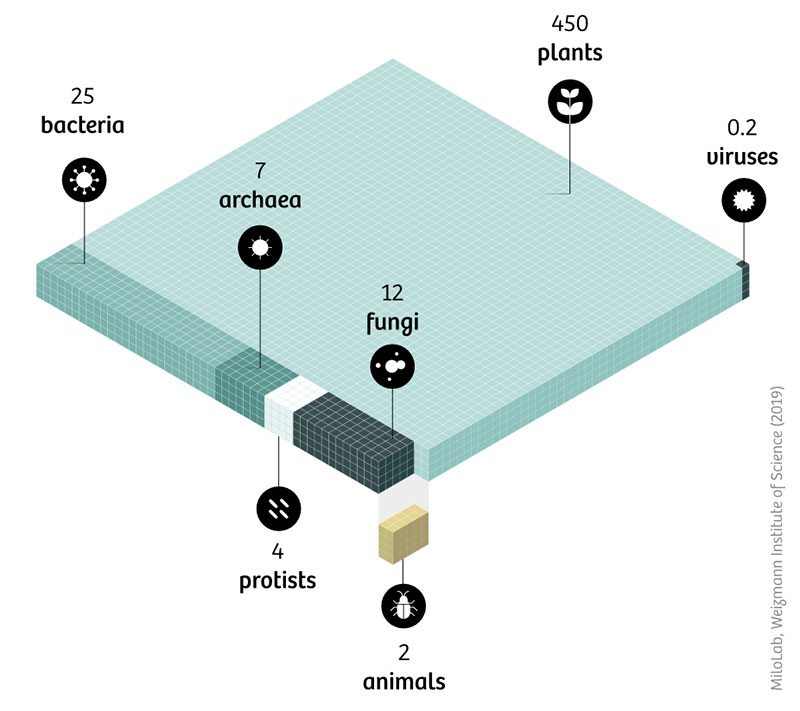
Overwhelmingly, biomass on earth is made up of plants. Big flag: deforestation is bad, reforestation—with habitat restoration for sustainable, optimum health—is good.
The GBP is life-centered and therefore best for those who wish to effect a living future. Those who still think in money should—to borrow a phrase—put on the mind of the body of life in evolutionary time. If, that is, they can imagine valuing life on earth over short-term monetary gains.
Comments